A Parent's Guide to the Bulgarian School System
From the structure of grades to the flower-filled first day, here's what families need to know about schooling in Bulgaria.
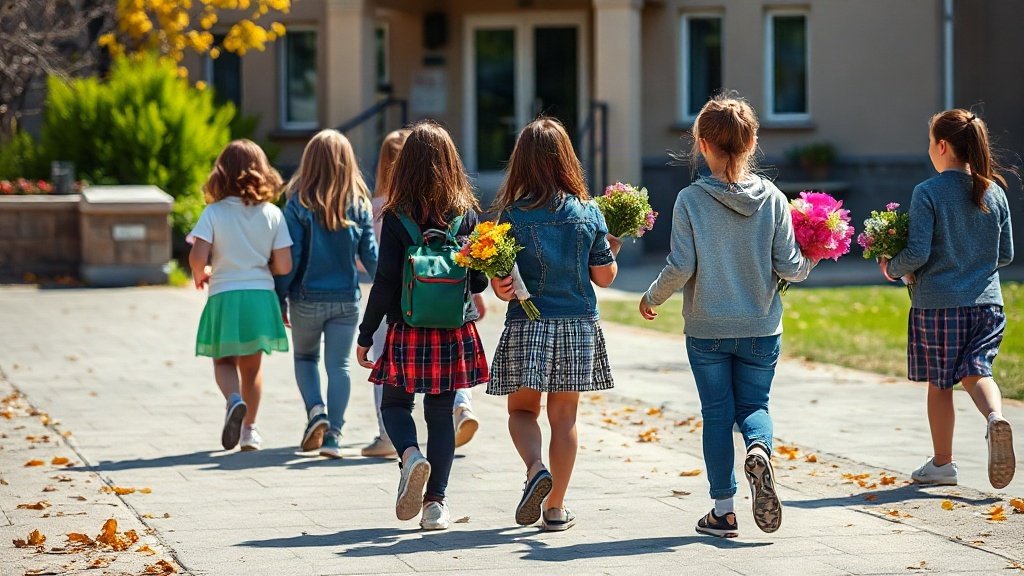
Illustration: AI-generated image
For families moving to Bulgaria or already living here, understanding the school system can make the first weeks much smoother. This guide covers how schooling is organised, when the year starts and ends, and a few traditions that make Bulgarian schools unique.
How the School System Is Organised
Education is compulsory from ages 5 or 6 to 16. The system is divided into pre-school, primary school, lower secondary, and upper secondary. Most children attend state schools, which are free, though private and specialised schools also exist. The school week runs Monday to Friday, and lessons typically start around 8 a.m.
- Pre-school (detska gradina): Optional, usually for ages 3 to 6, but widely attended.
- Primary school (nachalno uchilishte): Grades 1 to 4, for children aged around 6/7 to 10/11.
- Lower secondary (progimnazia): Grades 5 to 7, for ages 11 to 14.
- Upper secondary (gimnazia or SOU): Grades 8 to 12, for ages 14 to 18/19. Students may specialise in languages, sciences, or vocational tracks.
Key Dates in the School Year
The school year usually begins on 15 September and ends in late May or early June, depending on the grade. There are several breaks: a short autumn holiday in late October or early November, a longer Christmas holiday, a spring break around Easter, and the long summer holiday. Exact dates are set each year by the Ministry of Education and Science.
First Day Traditions
The first day of school is a big celebration, especially for first graders. Children dress smartly and bring flowers for their teachers. Many schools hold a ceremony where the national anthem is sung and the school bell is rung by a first grader. Parents often attend, and there may be a small reception with sweets and refreshments.
Grading and Reports
Bulgarian schools use a six-point grading scale: 6 is excellent, 5 is very good, 4 is good, 3 is satisfactory, and 2 is fail. Reports are given at the end of each term, and there are parent-teacher meetings throughout the year. Behaviour and effort are also noted, but they do not affect the academic grade.
A Typical School Day
Lessons are 45 minutes long, with breaks between them. Primary school children often finish by early afternoon, while older students may have more periods and sometimes stay until 4 or 5 p.m. Many schools offer after-school clubs for sports, arts, and languages. School lunches are not always provided, so children may bring food from home or buy snacks at the school canteen or nearby shops.
Practical Tips for Foreign Families
If you move to Bulgaria with school-age children, start by contacting the local municipality's education department. They will help you find a school with available places and explain the enrollment process. Documents usually include the child's birth certificate, proof of address, and health records. Some schools may require a short interview or placement test, especially for older children. Bulgarian language support is available in many areas.
Settling into a new school can be challenging, but Bulgarian schools are generally welcoming, and the community spirit is strong. Knowing what to expect can make the transition easier for both you and your child.





